Web editorial adaptation
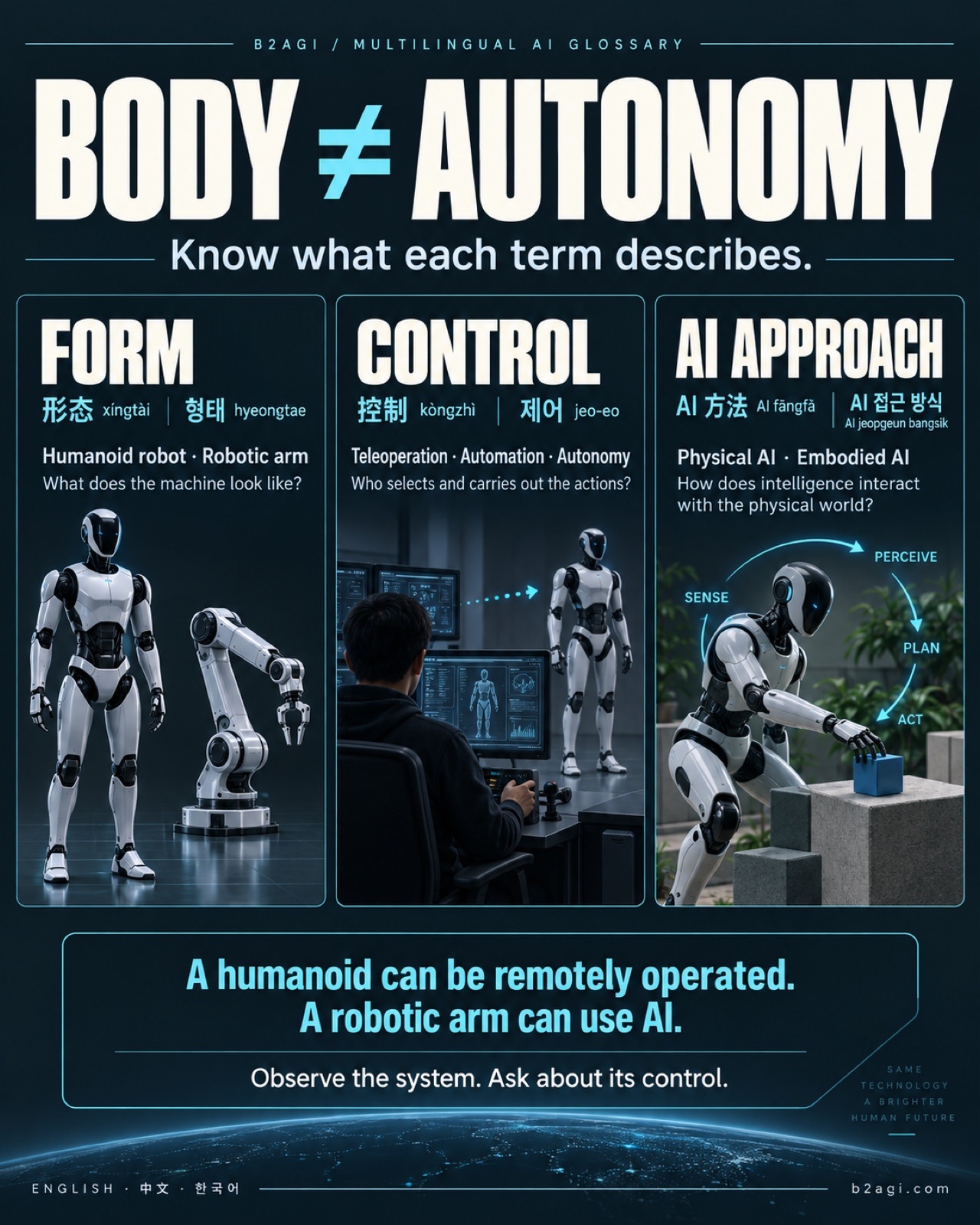
These six terms distinguish a system's body, control and interaction with its environment. The original glossary is an introductory guide, not a universal classification standard.
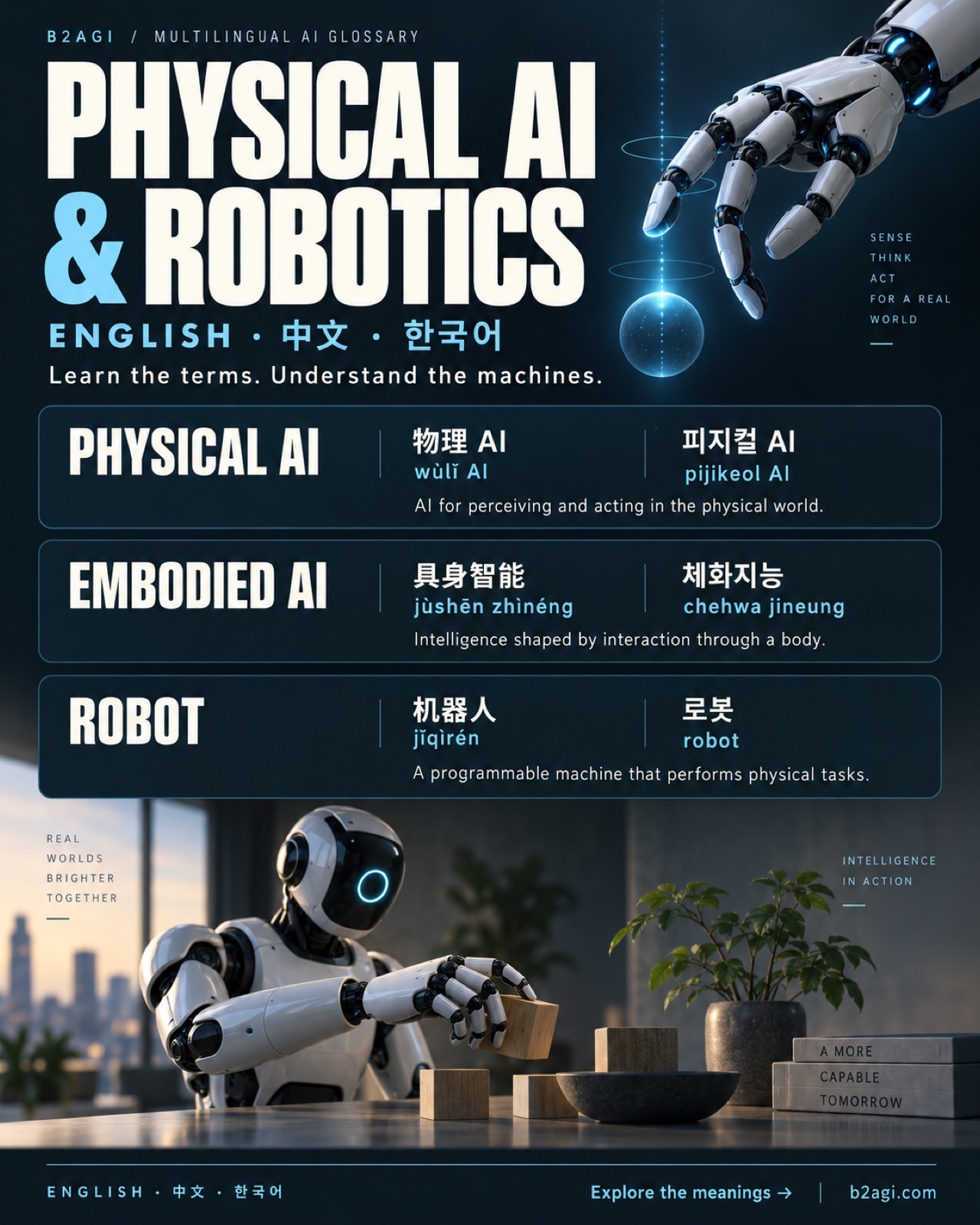
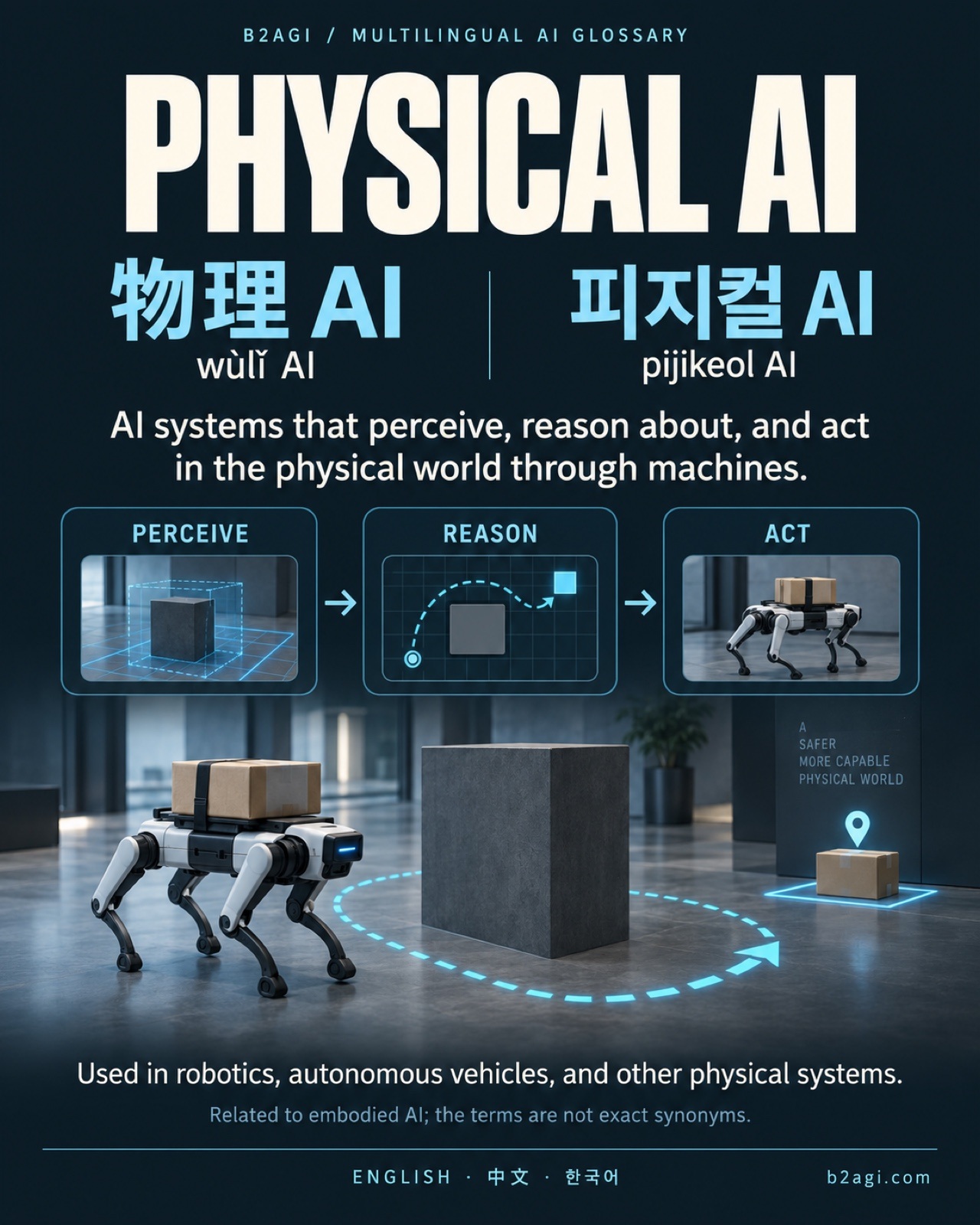
Physical AI / 物理 AI / 피지컬 AI: AI systems that perceive, reason about and act in the physical world through machines.
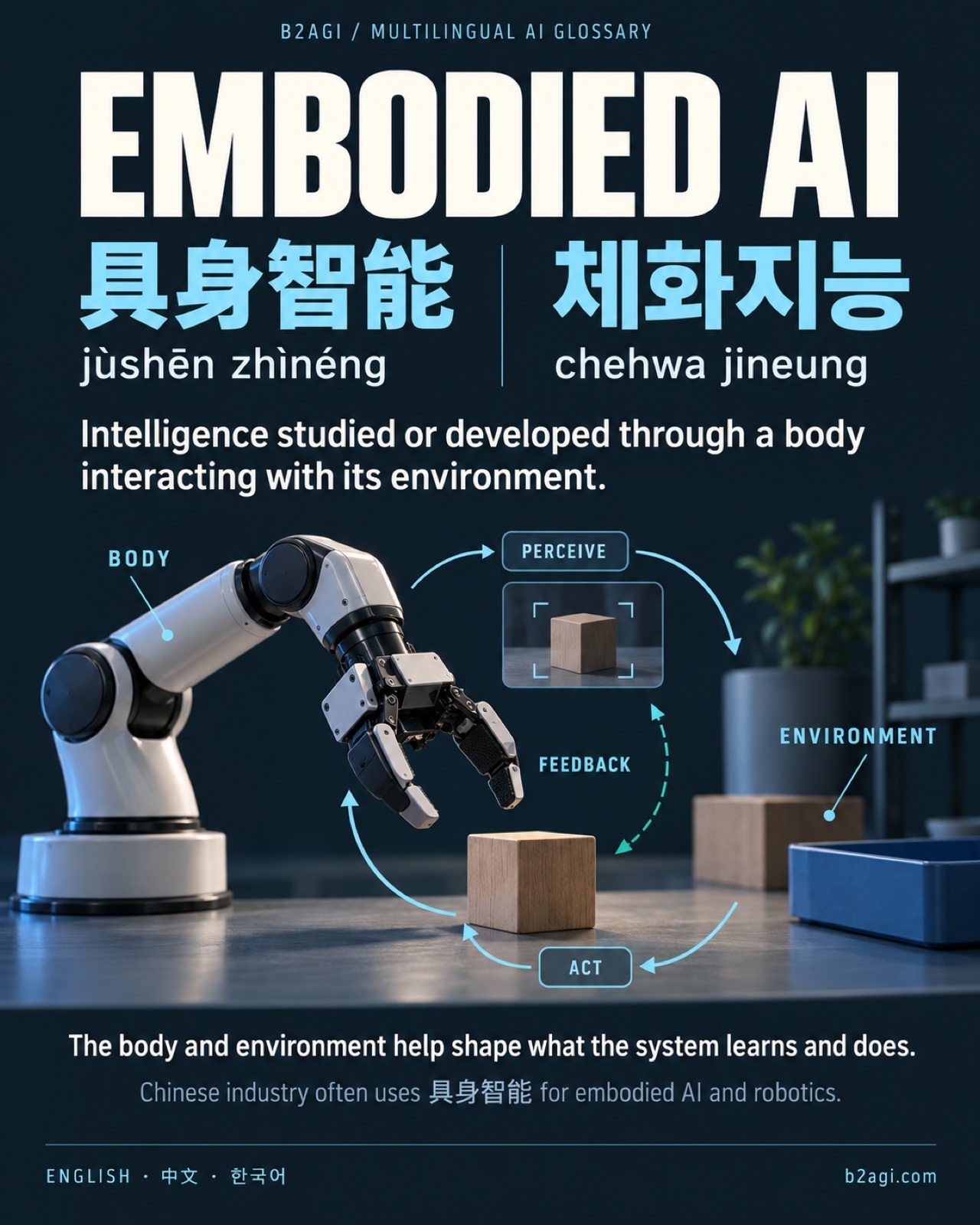
Embodied AI / 具身智能 / 체화지능: intelligence studied or developed through a body interacting with its environment. It overlaps with physical AI, but the terms are not exact synonyms; usage varies across research and industry.
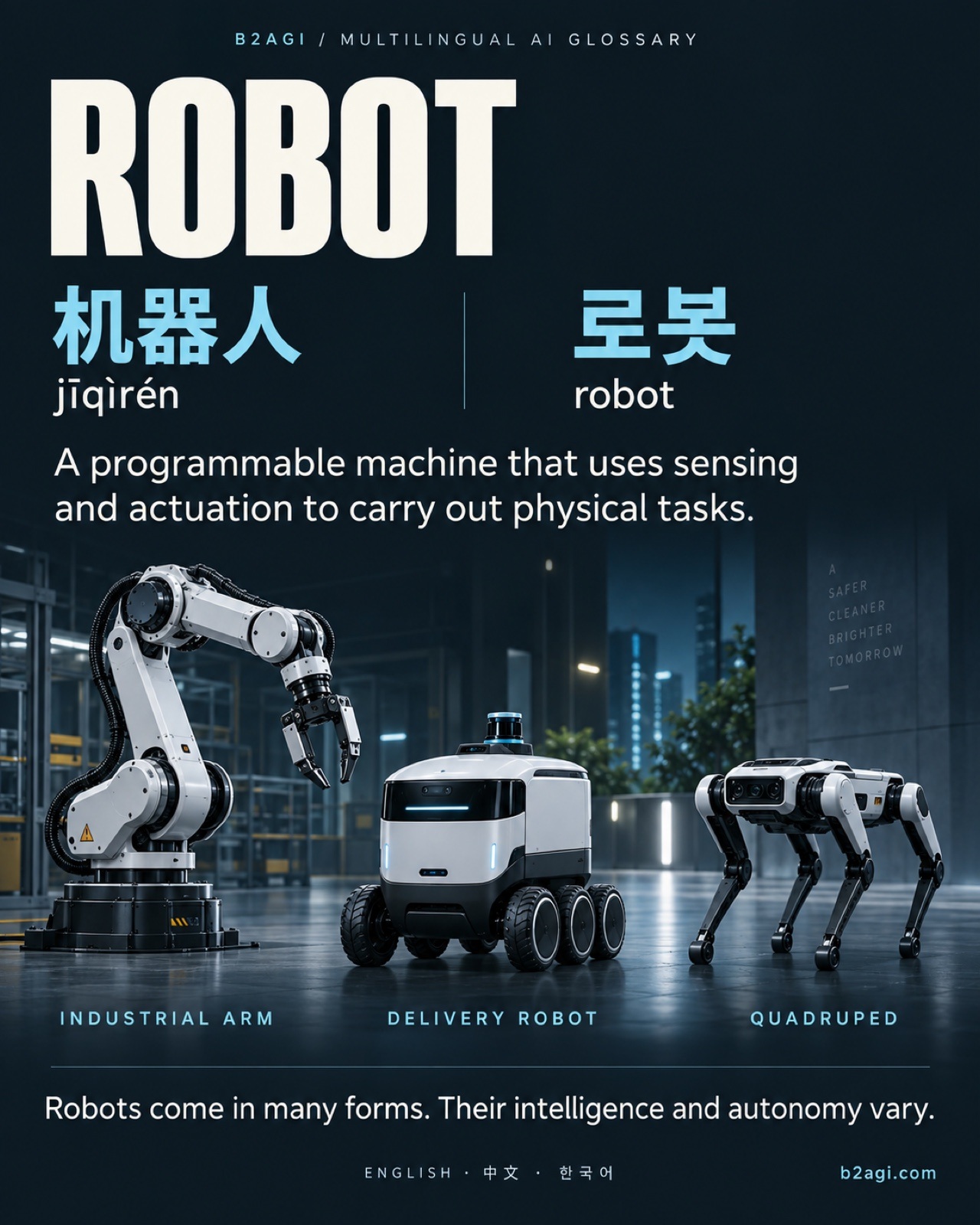
Robot / 机器人 / 로봇: a programmable machine that uses sensing and actuation to carry out physical tasks. This description alone does not establish its level of intelligence or autonomy.
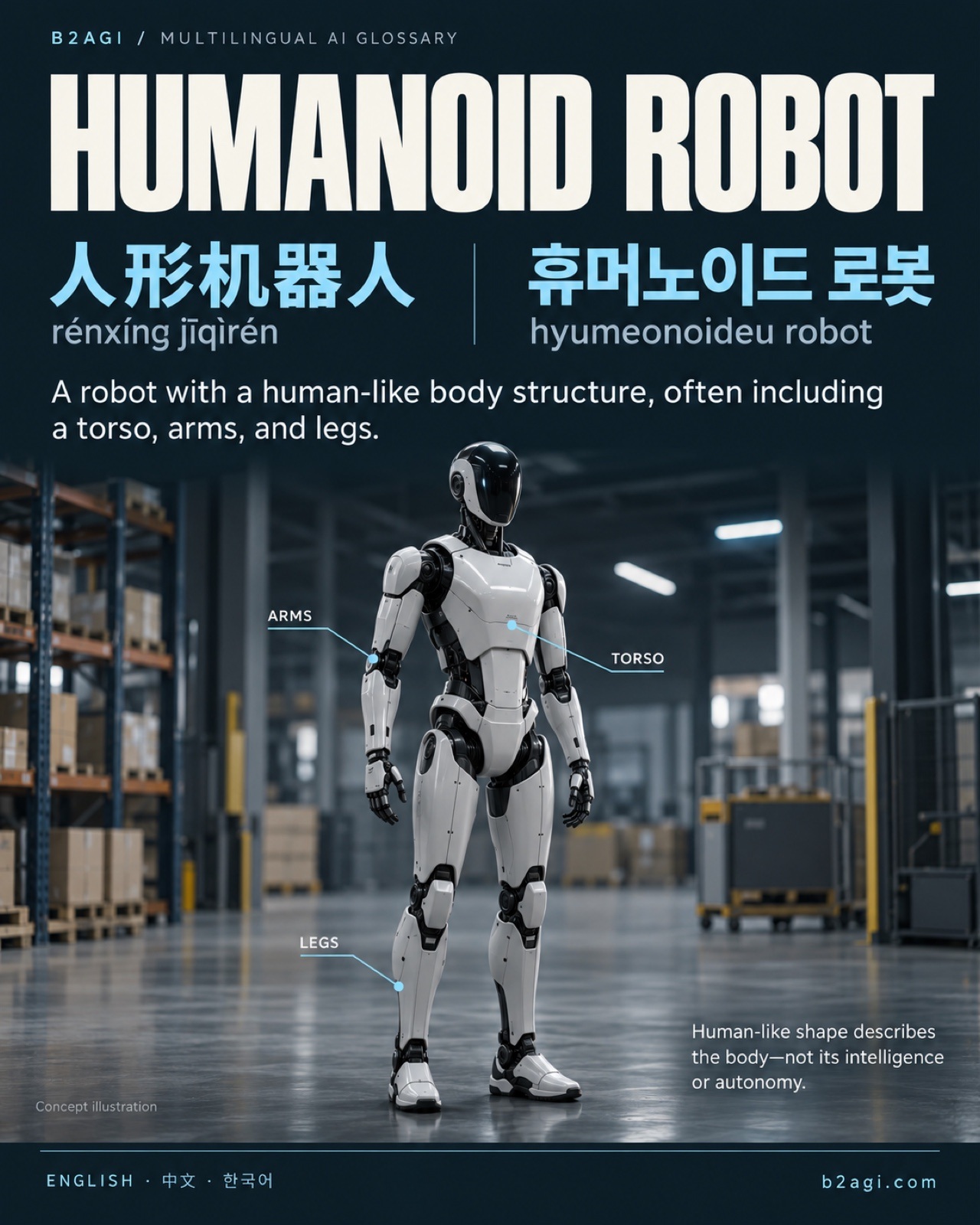
Humanoid robot / 人形机器人 / 휴머노이드 로봇: a robot with a human-like body structure, often including a torso, arms and legs. A humanoid can be remotely operated.
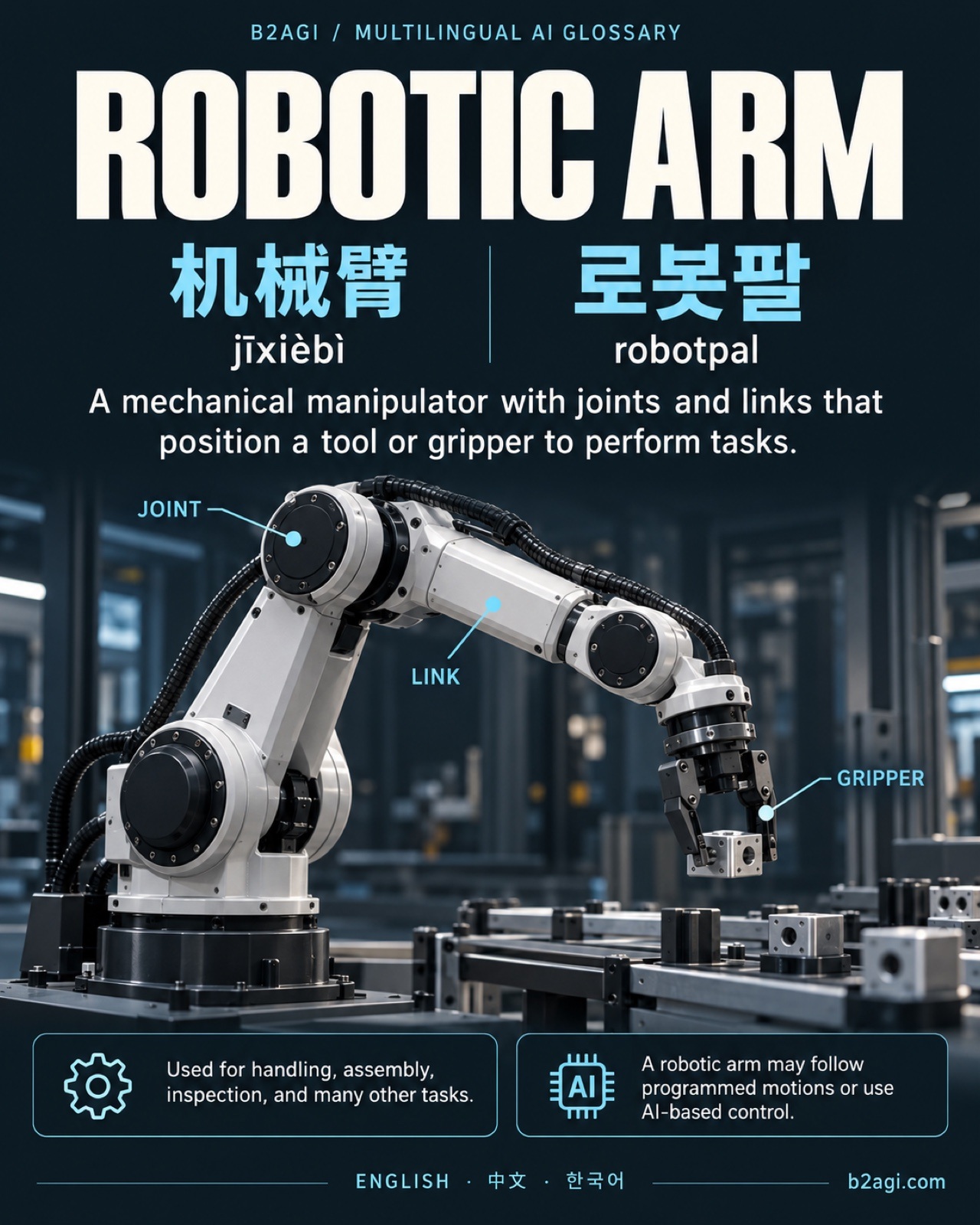
Robotic arm / 机械臂 / 로봇팔: a mechanical manipulator whose joints and links position a tool or gripper to perform tasks. An arm can use AI without a human-like body.
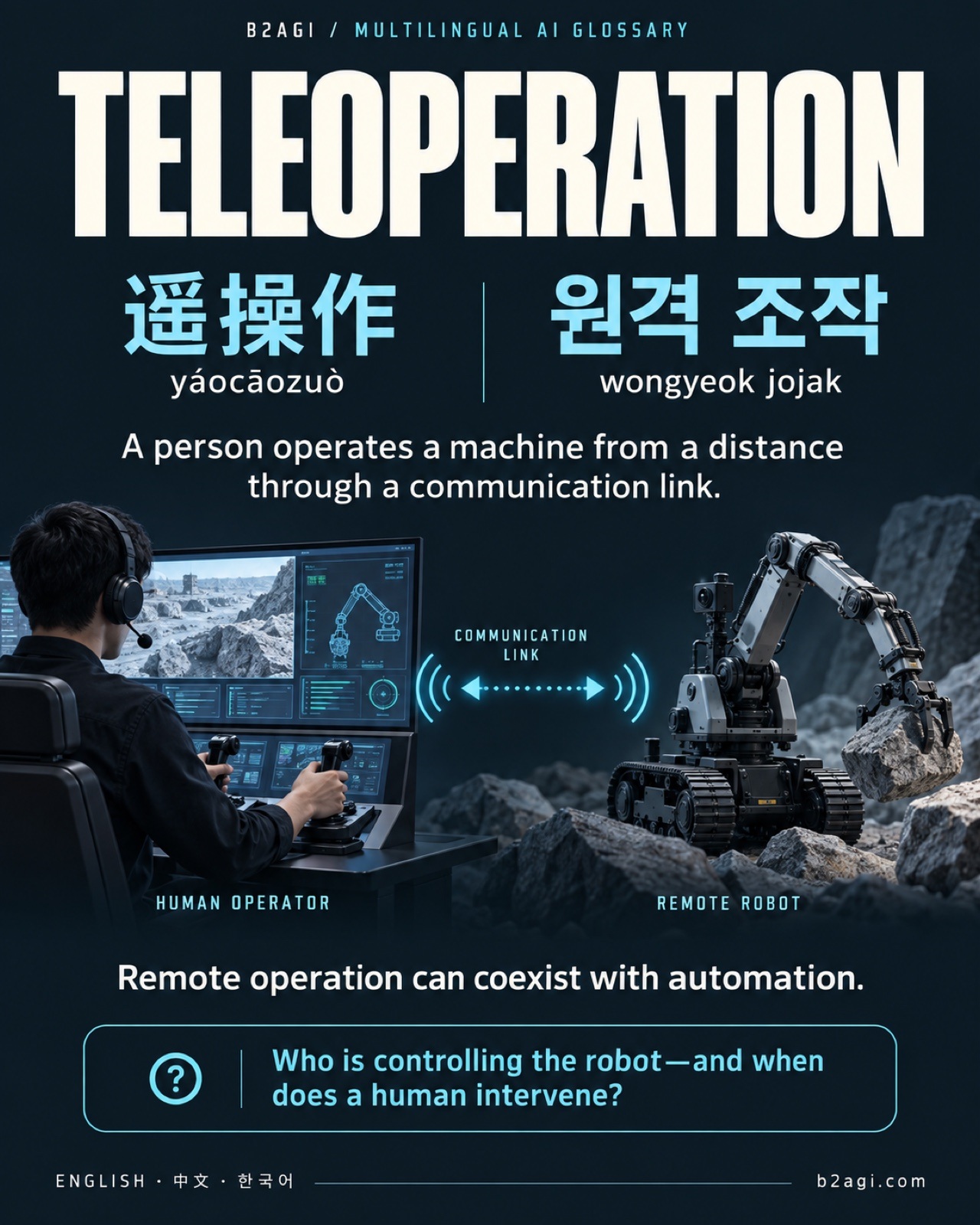
Teleoperation / 遥操作 / 원격 조작: operating a machine from a distance through a communication link. Remote operation can coexist with automation; it should not be mistaken for proof of full autonomy.
Ask who selects each action, when a person intervenes and what the machine can reliably do in this environment. The AI-generated concept illustrations are not deployment evidence. Pinyin and Korean romanization on the cards are reading aids.
Written from the supplied media and the cited sources. This is distinct from the original Instagram caption.
Original English caption
Historical caption, preserved as published. Read the web text above for qualifications and corrections.
Read from Instagram on 2026-09-18; original line breaks are not retained.
PHYSICAL AI & ROBOTICS IN CHINESE & KOREAN 🤖🌐 English · 中文 · 한국어 How do you say “embodied AI,” “humanoid robot,” or “teleoperation” in Chinese and Korean? B2AGI’s multilingual AI glossary connects the terms with pronunciation, English definitions, and visual explanations. 机器人用韩语怎么说? 체화지능은 영어와 중국어로 어떻게 표현할까요? PHYSICAL AI 🇨🇳 物理 AI — wùlǐ AI 🇰🇷 피지컬 AI — pijikeol AI AI systems that perceive, reason about, and act in the physical world through machines. EMBODIED AI 🇨🇳 具身智能 — jùshēn zhìnéng 🇰🇷 체화지능 — chehwa jineung Intelligence studied or developed through a body interacting with its environment. ROBOT 🇨🇳 机器人 — jīqìrén 🇰🇷 로봇 — robot A programmable machine that uses sensing and actuation to carry out physical tasks. HUMANOID ROBOT 🇨🇳 人形机器人 — rénxíng jīqìrén 🇰🇷 휴머노이드 로봇 — hyumeonoideu robot A robot with a human-like body structure, often including a torso, arms, and legs. ROBOTIC ARM 🇨🇳 机械臂 — jīxièbì 🇰🇷 로봇팔 — robotpal A mechanical manipulator with joints and links that position a tool or gripper to perform tasks. TELEOPERATION 🇨🇳 遥操作 — yáocāozuò 🇰🇷 원격 조작 — wongyeok jojak Operating a machine from a distance through a communication link. B2AGI take: These terms describe different aspects of a system: its body, its control, and how it interacts with the world. A humanoid can be remotely operated. A robotic arm can use AI. Remote operation can coexist with automation. Physical AI and embodied AI overlap, but they are not exact synonyms. Usage varies across research and industry. When you watch a robot, ask: Who selects its actions? When does a human intervene? What can it do reliably in this environment? Save this glossary for your next exhibition, site visit, or technical conversation. Pinyin includes Mandarin tones. Korean romanization is a reading aid. Visuals are AI-generated concept illustrations, not deployment evidence. B2AGI — Physical AI Deployment Intelligence We go where intelligence becomes physical. 🌐 b2agi.com #B2AGI #PhysicalAI #EmbodiedAI #具身智能 #로봇
Update ledger
2026-09-18 · Original media retained; three-language web text added with explicit evidence limits. The earlier local review was followed by the first public web edition on this date.
First web edition: · Web edition updated:
Web dates are separate from observation and original-post dates.