Web editorial adaptation
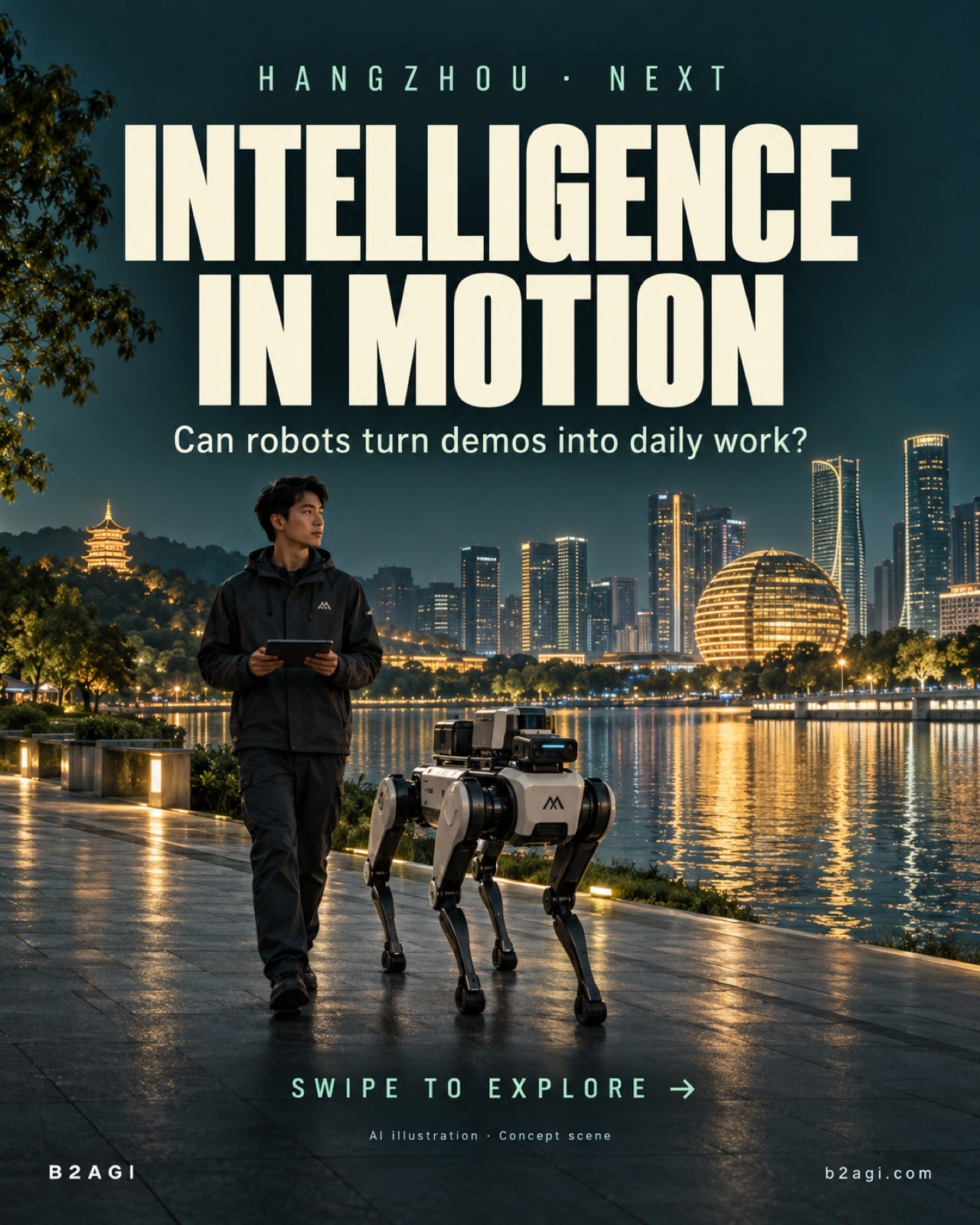
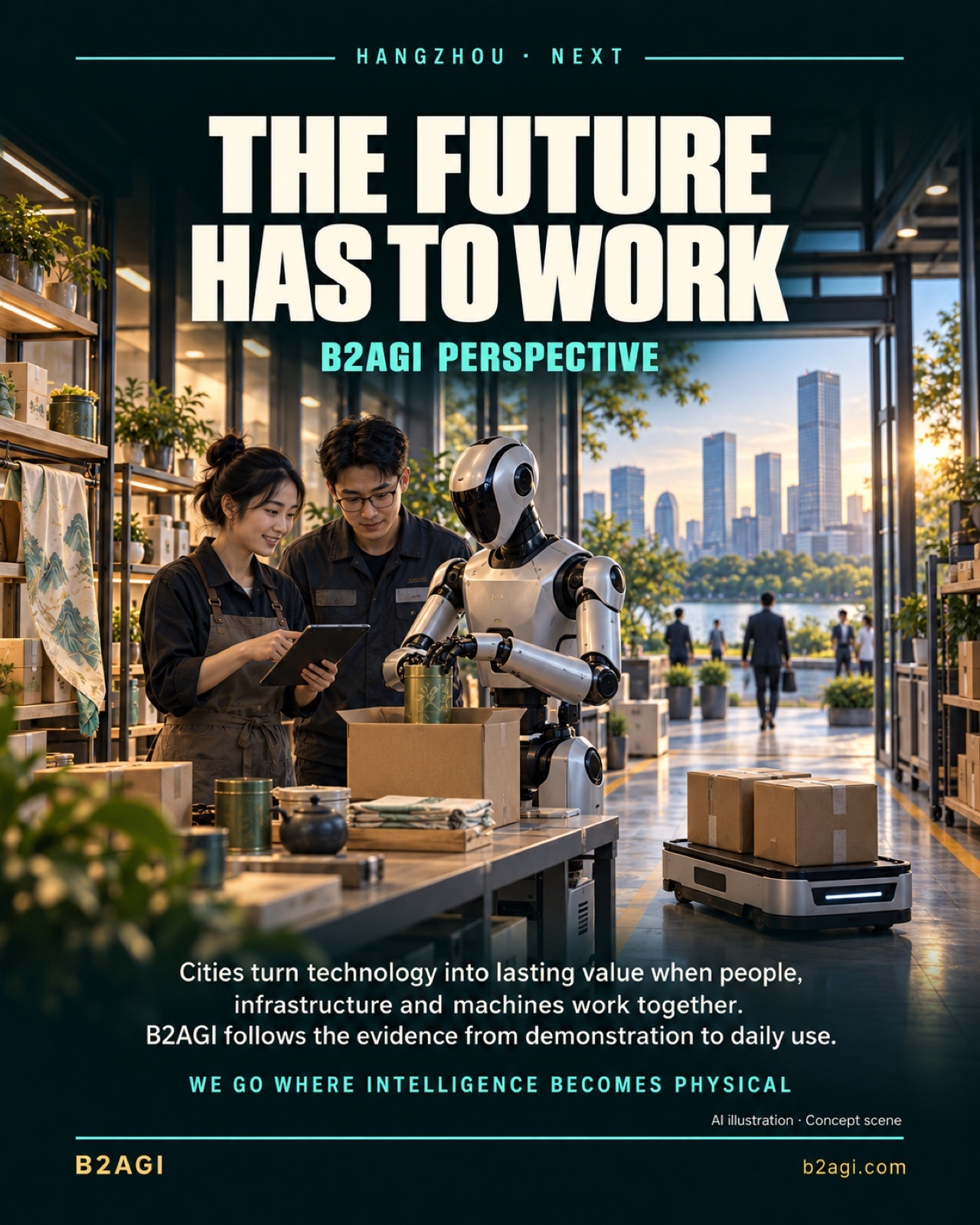
The demo ends. Can the robot keep working? Hangzhou: Next asks what it would take for machines to become part of everyday work. The cards are AI concept illustrations, not photographs documenting operating services in Hangzhou.
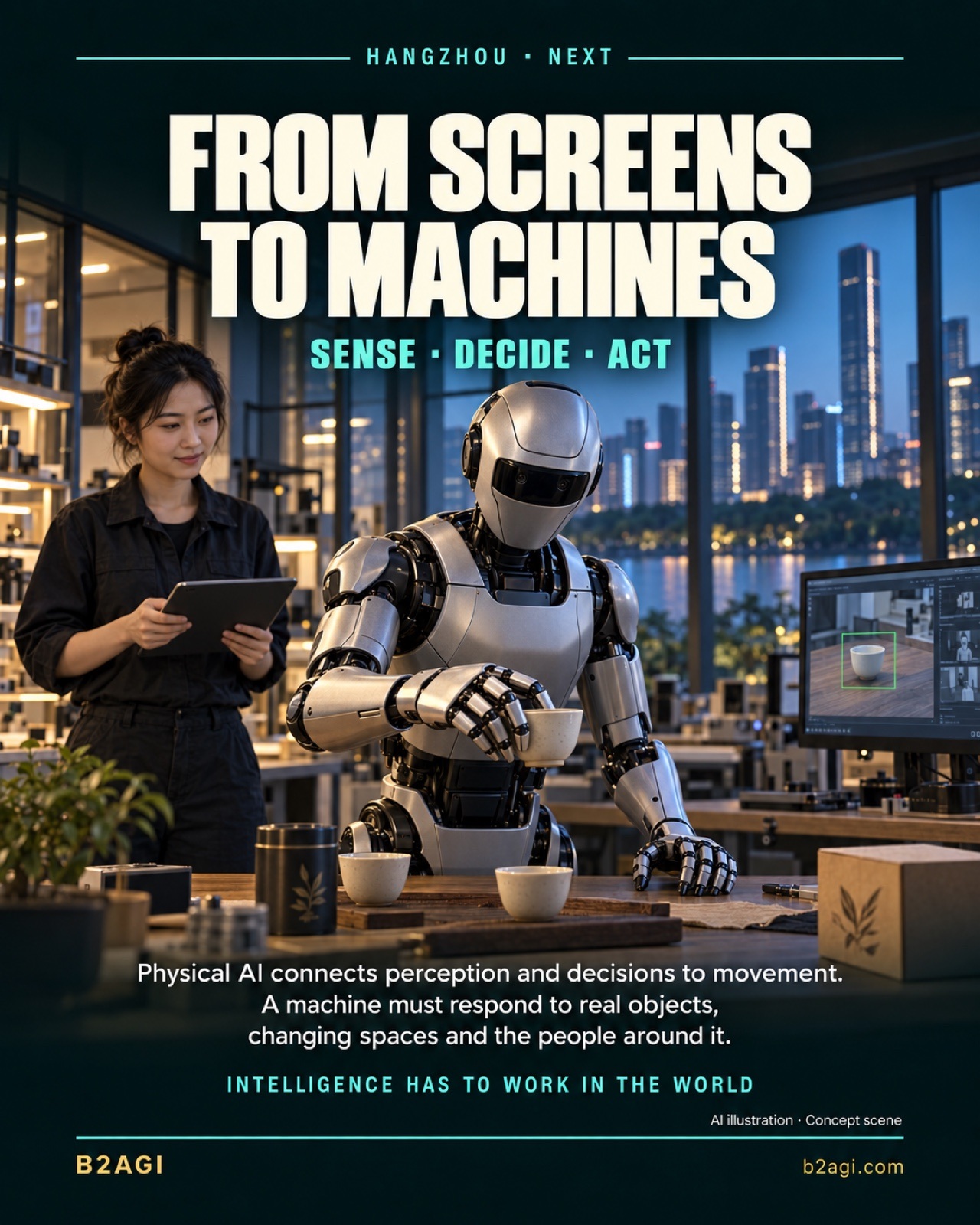
Sense, decide, act, then repeat: picking up one cup is only a beginning. Different objects, crowded spaces, interruptions and people nearby make continued work a different question from one successful demonstration.
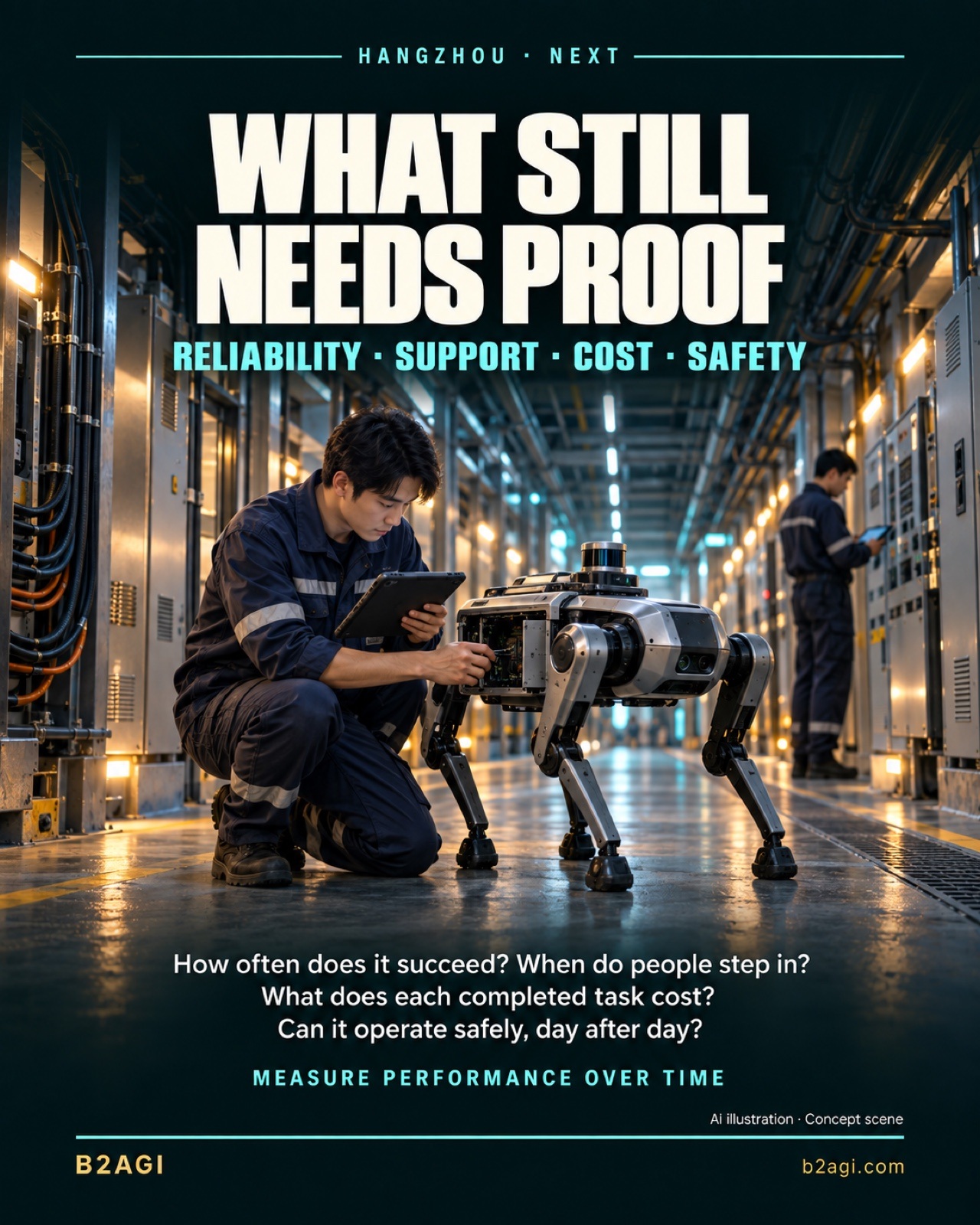
Four questions guide this series. Reliability: can the task keep being completed? Human support: who prepares, supervises and intervenes? Economics: does the result justify the full operating cost? Safety: what happens when something fails, and who is responsible?
A demonstration supplies one piece of evidence. Continued use needs follow-up under real conditions, maintenance records and measured outcomes for paying customers and the people who operate and maintain the system.
Trade moves goods; code coordinates activity; physical AI brings machines into action. These are three lenses on Hangzhou, not a claim that one era replaces another. The next chapter is a set of possibilities and requirements, not a confirmed citywide future.
Written from the supplied media and the cited sources. This is distinct from the original Instagram caption.
Original English caption
Historical caption, preserved as published. Read the web text above for qualifications and corrections.
Read from Instagram on 2026-09-18; original line breaks are not retained.
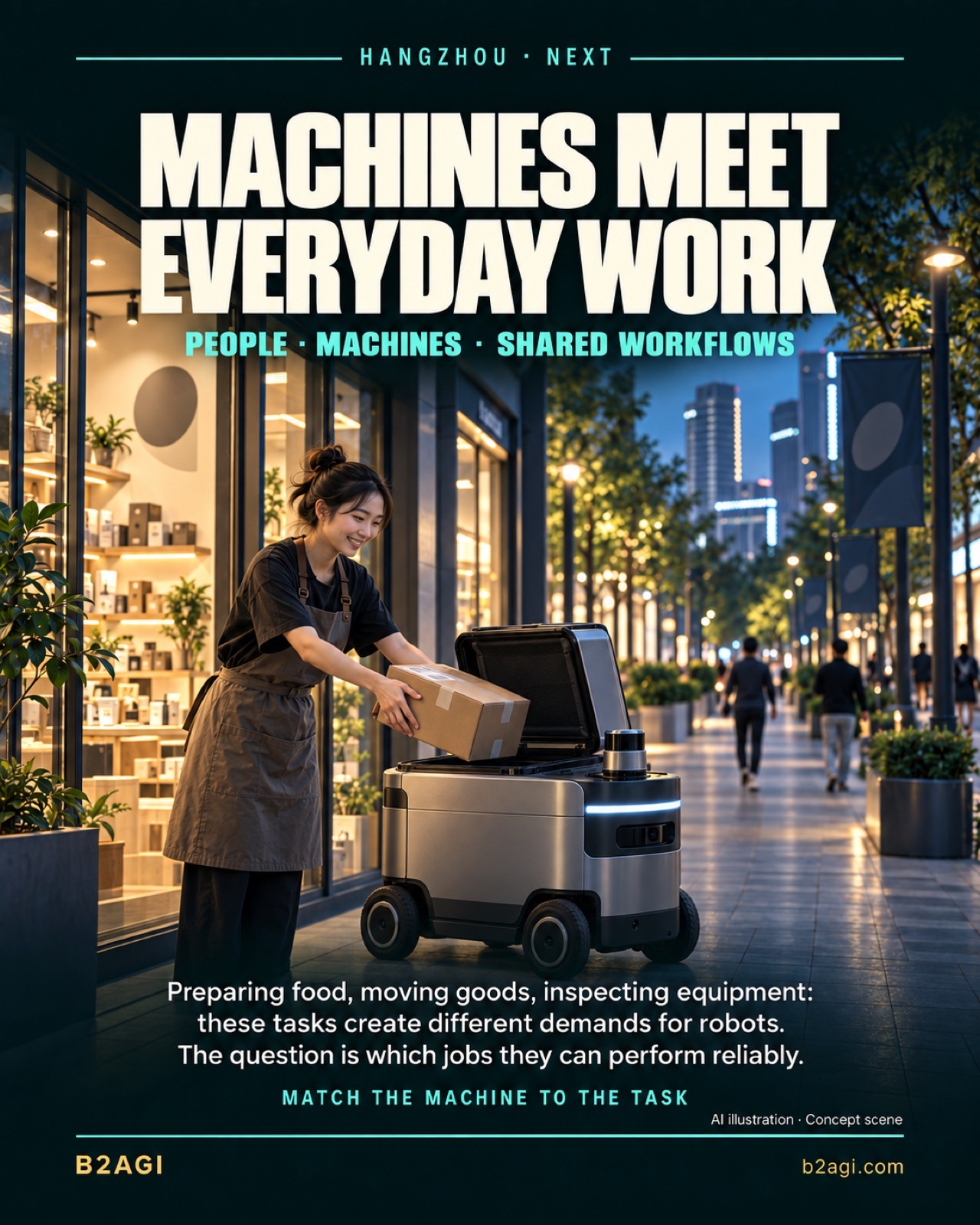
The demo ends. Can the robot keep working? HANGZHOU — INTELLIGENCE IN MOTION 🤖🌃🇨🇳 杭州 · NEXT A robot carrying a package or handling a cup is an interesting scene. The more important story begins when it has to repeat the task in everyday conditions. Different objects. Busy spaces. Unexpected interruptions. People working nearby. This chapter explores what it would take for physical intelligence to become useful, repeatable work. Swipe to explore what still needs proof → Sense → Decide → Act → Repeat We follow familiar objects from the earlier chapters — tea, ceramics and packaged goods — into scenes of people and machines working together. These are concept illustrations, not claims that the pictured services are already operating in Hangzhou. They help frame the questions B2AGI wants to investigate: • Reliability — can the system keep completing the task? • Human support — who prepares, supervises and intervenes? • Economics — does the value justify the full operating cost? • Safety — how are failures handled, and who is responsible? A successful demonstration is one piece of evidence. Deployment requires evidence from continued use: real customers, operating conditions, maintenance and measurable outcomes. B2AGI take: THE FUTURE HAS TO WORK. For customers who pay. For people who use and maintain it. For the places where it operates. Across this series, we have read Hangzhou through three lenses: TRADE — moving goods. CODE — coordinating activity. PHYSICAL AI — machines acting in the world. These layers coexist. The question is how they work together to create lasting value. 📍 Hangzhou · Zhejiang · China 🤖 Lens: Physical AI · robotics · deployment conditions 🔎 Approach: B2AGI analytical questions for field verification 🎨 Visuals: AI concept illustrations; not evidence of deployment ⚠️ NEXT describes possibilities and requirements, not a confirmed citywide future B2AGI — Physical AI Deployment Intelligence We go where intelligence becomes physical. 🌐 b2agi.com #B2AGI #PhysicalAI #Robotics #Hangzhou #DeploymentIntelligence
Update ledger
2026-09-18 · Original media retained; three-language web text added with explicit evidence limits. The earlier local review was followed by the first public web edition on this date.
First web edition: · Web edition updated:
Web dates are separate from observation and original-post dates.