

Web editorial adaptation
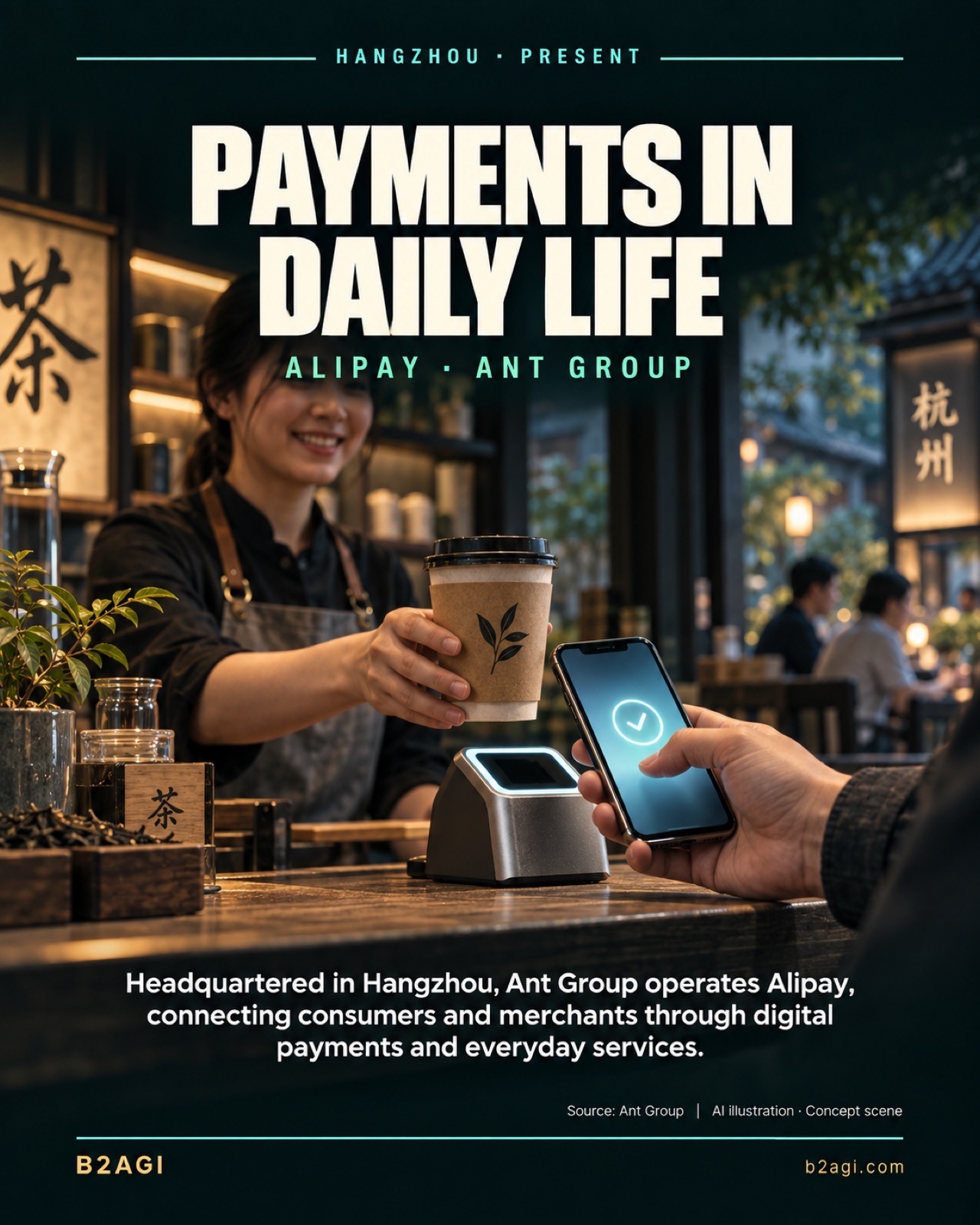
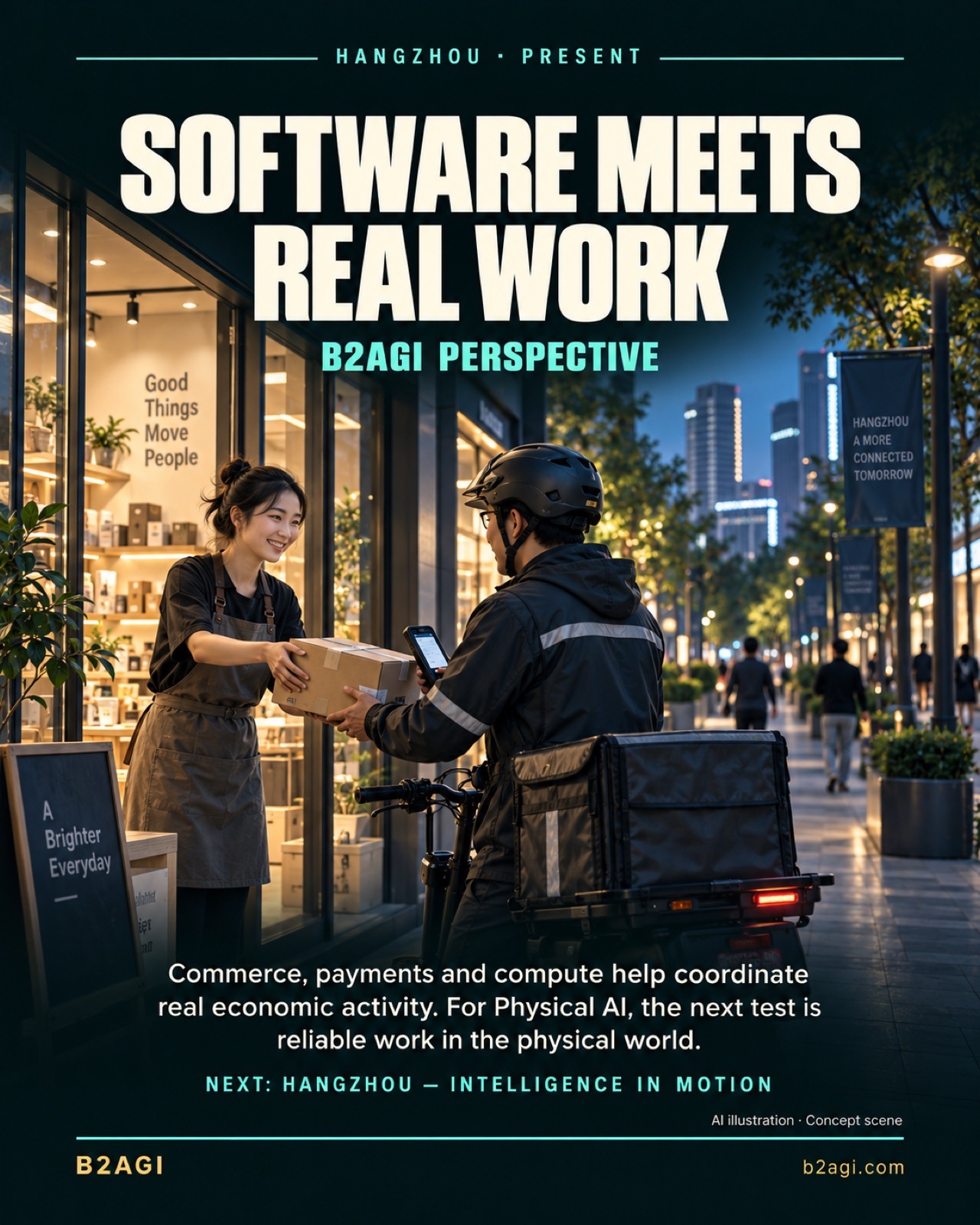
You tap pay. What has to happen next? A physical order still needs someone or something to prepare, pack and deliver it. Hangzhou: Present follows that connection between a screen and the work beyond it.
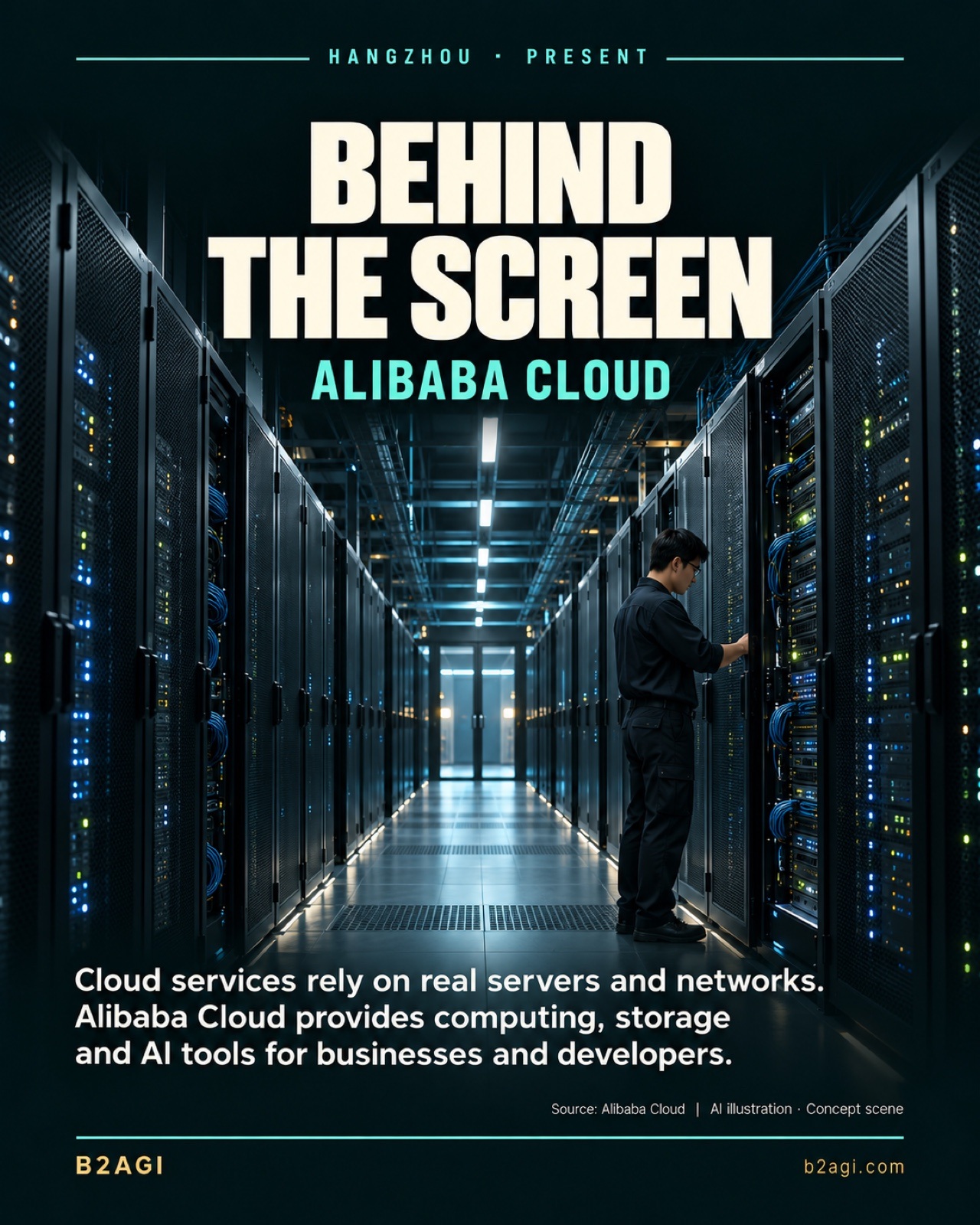
Markets, payments, cloud and physical work form the series' explanatory sequence. Taobao, Tmall, Alipay and Alibaba Cloud are examples used in the original cards, not a claim that every order follows one technical route or belongs to one company.
The interface changes, but inventory, energy, logistics and people handling exceptions remain. The earlier trade chapter and this digital chapter show different systems for coordinating activity, not the disappearance of physical work.
B2AGI's interpretation is that physical AI extends this question: when machines take on more work, can they do it reliably, what human support remains necessary, and does the outcome improve? The images are labeled AI concept illustrations, not company visits, actual server rooms or documented customer transactions.
Written from the supplied media and the cited sources. This is distinct from the original Instagram caption.
Original English caption
Historical caption, preserved as published. Read the web text above for qualifications and corrections.
Read from Instagram on 2026-09-18; original line breaks are not retained.
You tap “pay.” What has to happen next? HANGZHOU — POWERED BY CODE 📱🌃🇨🇳 杭州 · PRESENT An order appears on a screen. Someone still has to prepare it, pack it and deliver it. That connection between software and physical work is the focus of this chapter. Through examples such as Taobao and Tmall, Alipay and Alibaba Cloud, we explore different layers of digital commerce: Finding a product. Completing a payment. Processing information. Coordinating the work behind an order. Swipe to look behind the screen → Markets → Payments → Cloud → Physical Work In the previous chapter, silk, tea and ceramics moved through workshops, markets and waterways. Here, familiar goods appear in a different system: online storefronts, digital payments and connected operations. The interface changes. The physical work remains. A digital transaction still depends on inventory, energy, logistics and people who handle exceptions when the process breaks. B2AGI take: To understand Physical AI, first look at where software already meets real work. Then ask what happens when machines begin performing more of that work themselves. What can they handle reliably? Where is human support still needed? Does the new system improve the outcome? Next chapter: INTELLIGENCE IN MOTION — from digital coordination to physical action. 📍 Hangzhou · Zhejiang · China 🤖 Lens: Digital commerce · payments · cloud infrastructure 🔎 Basis: Official Alibaba and Ant Group materials; B2AGI interpretation 🎨 Visuals: AI concept illustrations; not documentation of specific shops, facilities or transactions B2AGI — Physical AI Deployment Intelligence We go where intelligence becomes physical. 🌐 b2agi.com #B2AGI #Hangzhou #DigitalEconomy #PhysicalAI #China
Update ledger
2026-09-18 · Original media retained; three-language web text added with explicit evidence limits. The earlier local review was followed by the first public web edition on this date.
First web edition: · Web edition updated:
Web dates are separate from observation and original-post dates.